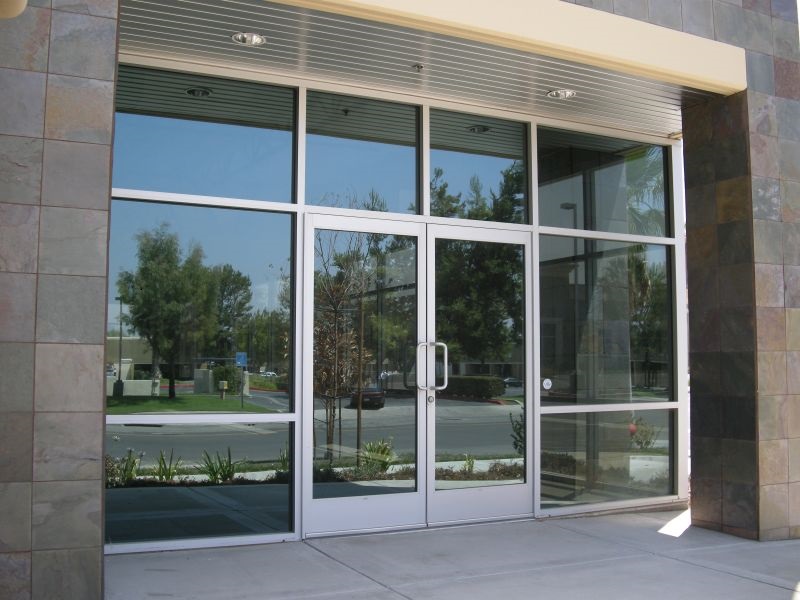
The lobby door of a residential building does more work than any other door on the property, by a wide margin. In a mid-size condo it might cycle several hundred times in a day — residents, visitors, dog walks, deliveries, movers, contractors. A door designed for ordinary commercial duty is being asked to do something closer to transit-station duty, and it ages accordingly.
What makes lobby doors frustrating for boards and property managers is that they rarely fail outright. They drift. Slowly the door gets heavier, the operator gets slower, the gap at the bottom opens up, and one day the complaint log has eleven entries about it and nobody can point to when it started.
What wears out, in the order it usually happens
The closer or operator
This is the first thing to go and the most frequently misdiagnosed. A door closer is a hydraulic device with valves controlling sweep speed, latch speed and backcheck. Those settings drift with temperature and with wear, and the fluid degrades. A closer that is slightly out of adjustment produces exactly the symptoms residents report: the door slams, or it stops an inch short of latching, or it is suddenly hard to push.
On a powered entrance, the operator has more to drift. Opening speed, closing speed, hold-open time, and the force it applies are all adjustable and all specified. When hold-open time shortens, people get caught by the door. When closing force creeps up, it becomes a hazard for anyone slow through the opening. Routine door closer repair and adjustment resolves a large share of lobby complaints without touching the door itself.
Hinges and pivots
High-cycle doors eat hinges. Standard butt hinges on a lobby door will develop play, and once there is play the door sags, which throws off the latch and the bottom seal and loads the closer further. This is why lobby doors often want continuous geared hinges or heavy-duty pivots rather than ordinary hinges — the cycle count justifies it.
The lock, strike and access control
Electric strikes and mag locks on lobby doors are cycled constantly and they do wear. A strike that is beginning to fail produces intermittent symptoms — the fob works, the door buzzes, but it does not release until the second try — which is maddening to diagnose because it works whenever you test it. Intermittent is a wear signal, not a software problem.
Glass, frames and the bottom rail
Lobby doors are usually aluminium and glass. The bottom rail takes the abuse: carts, luggage, strollers, door stops, winter grit. Aluminium corners can loosen, which lets the door rack slightly out of square, and once a glass door is racked the glass is under stress it was not designed for.
Why winter makes everything worse at once
Lobby doors have a particularly bad time in a Toronto winter, for reasons that compound.
Stack effect is the big one. A tall building pulls air in at the bottom and pushes it out at the top, which means the lobby door is fighting a pressure difference every time it opens. Closers and operators adjusted in summer can be badly underpowered against winter stack pressure, and the same door that worked fine in August will not close fully in January. That is not a broken closer; it is a closer that needs seasonal attention on a building where pressure varies.
Then there is grit and salt in the threshold and the bottom guide, water freezing where the door meets the sill, and cold stiffening every seal on the assembly. A vestibule helps enormously with all of this, which is why buildings with a proper two-door airlock have fewer lobby door problems than buildings where one door separates the lobby from the street.
The accessibility dimension
A lobby door is the main entrance to people’s homes, which means it has to work for residents using walkers, wheelchairs, strollers and canes — including residents who were not using them when they moved in.
Two things matter in practice. The force needed to open the door has a limit, and it creeps up as the closer wears and the hinges sag; a door that has quietly become heavy is an accessibility failure even though nothing is visibly broken. And where there is a power operator, the hold-open time has to be long enough for someone moving slowly to clear the opening — a setting that gets shortened by well-meaning people trying to keep heat in.
The right answer for most buildings is a properly specified power operator with a push-pad that is actually reachable from a seated position, maintained to its original settings. Retrofitting an accessible door operator is a well-trodden job on existing condo entrances and does not usually mean replacing the door or frame.
What a board should actually do about it
The pattern that works is treating the main entrance as a serviced asset rather than something you fix when it breaks.
Put it on a schedule
Twice a year, ideally before winter and after it. The before-winter visit sets the closer or operator for the cold season and checks seals and thresholds. The spring visit undoes the winter settings and deals with whatever the salt and grit did.
Log complaints with dates
This sounds bureaucratic and it is genuinely useful. Lobby door problems drift, so the only way anyone can tell whether something is getting worse is a record. Three entries about the door being heavy over two months is actionable information; the same three complaints made verbally to three different people are not.
Check the whole opening, not the complaint
Residents report symptoms, and symptoms point at the wrong component constantly. A door that slams gets reported as a broken closer when the actual cause is sagging hinges loading the closer beyond its range. Having the full opening assessed — hinges, closer, operator, strike, threshold, frame square — is what stops the same repair being done three times. That is the normal scope for condo lobby door repair, and it is why the assessment matters more than the part.
Decide about the vestibule honestly
If a building has an airlock and one of its two doors has been propped or disabled for years, the building is running on a single door and getting all the winter problems that come with it. Restoring the vestibule to working order often fixes more than any adjustment will.
FAQ
Residents say the lobby door is too heavy. Is that a repair or a replacement?
Almost always a repair. Excessive opening force usually comes from a closer out of adjustment, worn hinges letting the door sag, or binding at the threshold. All three are serviceable. Replacement enters the conversation only when the frame is out of square or the door assembly itself has failed structurally.
Our automatic door sometimes does not open until the second press. Why?
Intermittent operation normally points to a wearing component — an activation device, a controller relay, or an electric strike that is no longer releasing reliably — rather than a setting. It is worth treating as a developing fault rather than waiting, because intermittent generally becomes constant.
The door closes fine in summer but not in winter. What changed?
Usually stack pressure in the building, plus stiffened seals and a cold threshold. The closer or operator has to be set for the harder condition, which is why seasonal adjustment on tall buildings is normal practice rather than a sign something is wrong.
How often should a lobby door be serviced?
For a busy residential entrance, twice a year is a reasonable baseline, with the pre-winter visit being the important one. Buildings with very high traffic or a single door onto the street sometimes justify more. The cost of drift is that components take each other out — a sagging door kills a closer, a tired closer wears a latch.
Can the glass be replaced without replacing the whole door?
Usually yes, provided the frame and corners are sound. What matters is checking why the glass failed — if the door has racked because the bottom rail corners have loosened, new glass in a racked door is under the same stress and the problem recurs.
Recent Comments