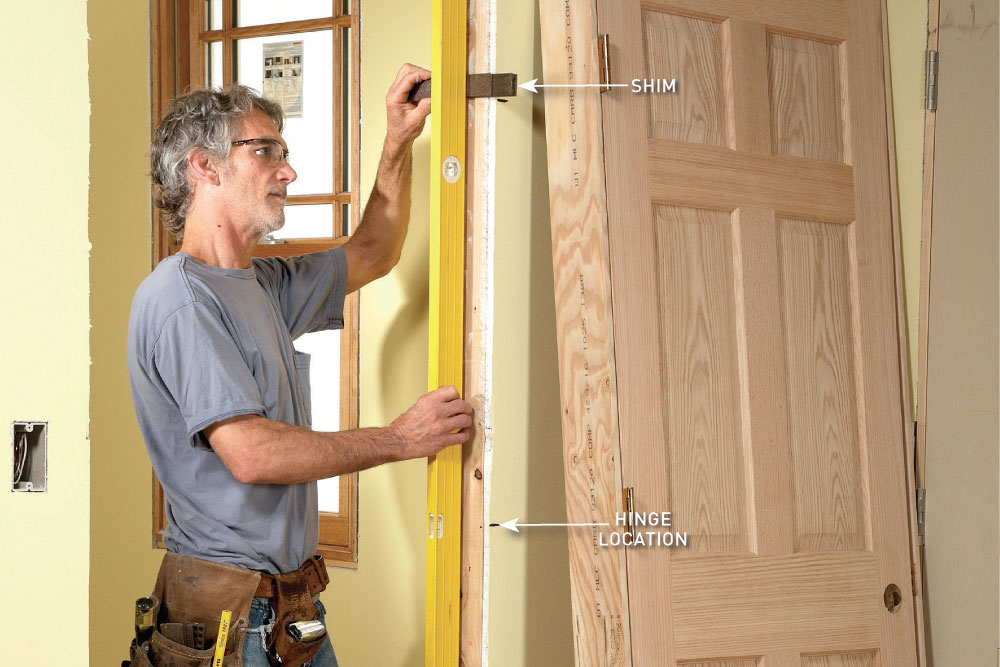
A door that squeaks, drags or needs a shoulder behind it is usually not worn out. In most Toronto houses the moving parts are still fine and the lubrication is either missing, dried out, or the wrong kind entirely. The wrong kind is the part people do not expect: a spray that frees a stiff lock this afternoon can leave it gummed solid by February.
Here is what belongs on each part of a door, what to keep away from it, and how to tell when lubricant was never going to be the fix.
Why lubrication is the maintenance step people get wrong
Doors fail slowly. A hinge that has gone dry starts to bind a fraction of a millimetre at a time, and the latch stops lining up with the strike long before anyone notices a noise. By then the usual reaction is to force the door, which loads the top hinge, pulls screws out of the jamb, and turns a two-minute job into carpentry.
The second problem is product choice. Most of what sits in a Canadian garage is a penetrating oil or a light machine oil. Both are good at loosening rust and bad at staying put. They attract dust, they wash out, and inside a lock cylinder they turn into a paste that holds the pins down. Locksmiths see the result every winter.
Four places on a door that actually need lubricant
Hinges
Hinge pins want a light grease or a lithium-based spray, applied at the top of the barrel so gravity carries it down. Swing the door back and forth a dozen times, then wipe the outside of the barrel. If a hinge still creaks after that, the pin or the knuckle is worn and lubricant will only quiet it for a few weeks.
One warning sign worth catching early: a hinge that creaks only in the last few inches of travel usually means the door is dropping and the leaves are no longer in plane. That is a fastening and alignment issue, and it often needs door frame repair rather than oil, especially on an older house where the jamb has taken on moisture.
Lock cylinders and keyways
Cylinders want a dry lubricant or a product made for locks — the kind that carries a PTFE or graphite film and flashes off. One short burst into the keyway, then work the key in and out several times and wipe the blade. Nothing more. A cylinder is a precision part with springs the thickness of a hair, and anything oily in there collects grit and holds it against the pins.
If a key has started to feel gritty or has to be jiggled at a certain depth, that is wear in the cylinder, not dryness. Rekeying or a lock change is the honest answer at that point, because a worn cylinder will keep getting worse no matter what goes into it.
Latches, strikes and deadbolt throws
The latch bolt itself, the deadbolt where it slides through the faceplate, and the lip of the strike plate all benefit from a thin film of dry lubricant. These are the surfaces that squeal when a door is closed quickly. Keep the product off the painted face of the door, and keep it out of the latch tailpiece if the lock is electronic.
Rollers and tracks on sliding doors
Sliding patio doors are the most common lubrication mistake in a house, because the instinct is to grease the track. Do not. A greased track becomes a dirt trap, and the grit then grinds the roller tyres flat. Vacuum the track, wipe it dry, and put a dry silicone or PTFE spray on the roller bearings through the adjustment holes at the bottom of the panel.
A sliding door that still needs two hands after a proper cleaning has flat-spotted or seized rollers. At that stage sliding door roller repair is the fix, and it is a much smaller job than most people assume once the panel is out.
What to keep away from a door
Penetrating sprays
These are solvents with a little oil in them. They are genuinely useful for freeing a rusted screw or a seized hinge pin, and that is where their job ends. Used on a lock, the solvent carries away whatever factory lubricant was in there, and what is left behind thickens and traps dust.
Household and cooking oils
Vegetable oil, olive oil and the small bottles of sewing-machine oil all go rancid or polymerise. In a cold garage or an unheated entry they also thicken enough to stiffen a latch on a January morning.
Graphite in the wrong place
Powdered graphite is fine in a plain mechanical cylinder and a poor idea almost everywhere else. It is abrasive once it mixes with moisture, and in a smart lock or an electric strike it can bridge contacts. Keep it out of anything with wiring.
A routine that suits the Ontario climate
Twice a year is enough for most homes, and the timing matters more than the frequency. Late autumn, before the first hard freeze, is the important one: everything that has absorbed summer humidity is about to contract, and a door that is already tight will bind. A second pass in spring clears out road salt and grit tracked in over the winter.
Work in this order. Vacuum and wipe first, because lubricant applied over dirt makes an abrasive paste. Then hinges, then latch and strike, then the cylinder last so nothing oily reaches it. Finish by checking the hinge screws with a screwdriver by hand — not a drill — and swapping any that spin for a longer screw that reaches the stud behind the jamb.
When lubricant is not the problem
Lubricant quiets friction. It does nothing for geometry. If the door rubs the jamb on one side only, if the gap along the top is wedge-shaped, if the deadbolt enters at an angle, or if the door swings itself open or closed, the frame has moved or the hinges have loosened. Spraying those symptoms wastes an afternoon and hides the real problem until the latch stops engaging altogether.
The same goes for a door that has started to swell seasonally and then split at a panel, and for any exterior door where daylight shows through the weatherstrip at the top corner. Those are fit and structure, not maintenance.
Frequently asked questions
How often should I lubricate a front door?
Twice a year covers a typical home: once in late autumn before the cold sets in, once in spring. A door onto a busy commercial corridor or a garage entry that sees salt and sand will want more attention.
Can I use white lithium grease on a lock?
On hinge pins, yes. Inside a cylinder, no. Lithium grease is too heavy for the springs and pins in a keyway, and it holds dust.
My key turns but the deadbolt will not throw. Is that a lubrication issue?
Almost never. That pattern usually means the bolt is binding in a misaligned strike or the frame has shifted. Check whether the bolt extends freely with the door open; if it does, the problem is alignment.
Is it safe to lubricate a smart lock?
Treat the mechanical parts the same way and keep every product away from the battery compartment, the contacts and any wiring. Dry lubricant only, in small amounts, and never a penetrating spray.
Why does my door only stick in winter?
Cold shrinks the door and the frame at different rates, and a slab that was marginal in summer becomes tight in January. Dry hinges make it worse, but the underlying cause is fit — which is why the autumn service is the one worth not skipping.
Recent Comments